Opener System Repair Maplewood, MN | Full Diagnostic | (651) 867-9272
Opener System Repair: Full sensor-motor-gear diagnostic in Maplewood, MN. Call (651) 867-9272 for same-day service.
Experienced Team
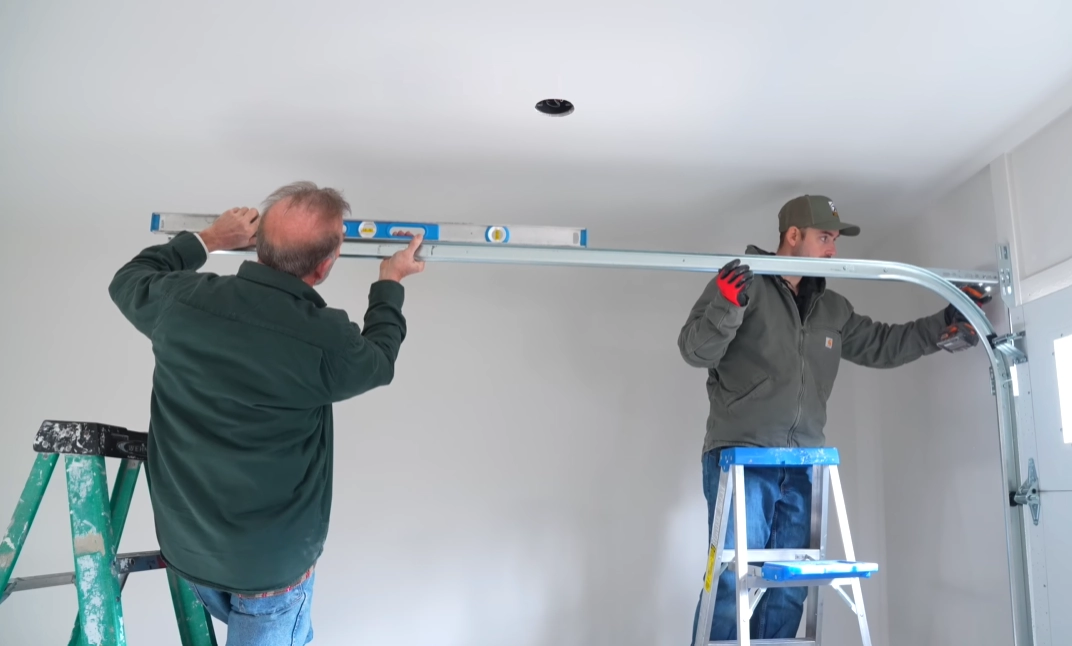
Garage Door Opener System Repair in Maplewood, MN
When a garage door opener misbehaves, the cause is rarely just “the opener”; it’s usually one part of a chain: sensors, motor, drive gear, and logic board, each of which fails differently. Maplewood Garage Door Repair runs a full system diagnostic rather than guessing at parts. Call (651) 867-9272.
This page goes deeper than a standard opener repair call. If you’ve already tried the basics fresh batteries, checking the wall button and the door is still misbehaving, the cause is usually an interaction between two parts of the system rather than a single obvious failure. Here’s how to read the symptoms.
Opener Humming, Door Not Moving — Full Diagnostic
Three possible causes, in order of likelihood during a Minnesota winter:
Broken torsion spring: the motor has lost its counterbalance and is trying to lift the full weight of the door alone. Confirm by looking for a coil gap in the spring above the door.
Cold-thickened lubricant on the rail or gear resistance has exceeded what the motor’s force setting allows. Common after the first hard freeze of the season.
Stripped or worn drive gear, often the end result of the motor having been forced against resistance (frozen door, unbalanced spring) repeatedly without being addressed.
The order matters because forcing the door through any of these, holding the wall button down, for example, pushes the failure toward the third, most expensive outcome.
Door Reverses Immediately After Closing — What’s Actually Happening?
This is almost always the photo-eye safety sensors in the small units, mounted a few inches off the floor on each side of the door frame, connected by an invisible beam. If the beam is broken (by frost, condensation, a stray object, or misalignment from a bump), federal safety standards require the opener to reverse rather than close. In winter, condensation followed by refreezing on the sensor lens is the most common cause we find in Maplewood garages, particularly in unheated or poorly ventilated garages where humidity from a warm car meets a cold sensor housing.
If the sensors are clean, aligned, and the door still reverses, the issue shifts to the logic board’s force or limit settings, which is a technician-level adjustment rather than a homeowner fix.
Door Opens But Won’t Close (or the Reverse) What Does That Tell a Technician?
An opener that performs one direction correctly and fails the other points away from the motor itself motors don’t typically fail in only one direction and toward the limit switches or travel settings that tell the opener where “fully open” and “fully closed” actually are. These settings can drift after a power surge, a manual adjustment gone wrong, or simply age. This is one of the few opener issues that’s genuinely quick to fix once diagnosed, but it’s frequently misdiagnosed as a motor problem by homeowners troubleshooting on their own, leading to an unnecessary opener replacement.
Open everyday from
24/7
Call to ask any question
Quality Services
We’re Providing Quality
Garage Door Repairing Services
Clients
Projects
Experts
Gears, Motor, or Logic Board — How Do You Tell Which Has Failed?
|
Should I Reset My Opener Before Calling for Repair?
It’s worth trying, and it resolves more calls than you’d expect. Most openers have a reset procedure involving the wall control or a learn button on the motor unit. Check your model’s manual or the manufacturer’s site. A reset clears minor logic-board glitches without cost. If the same symptom returns within a day or two, the issue is mechanical or sensor-related rather than a software hiccup, and a reset won’t fix it a second time.
When Does an Opener System Problem Actually Require Replacement?
Self-Diagnostic Checklist Before You Call
Answering these before you call lets a technician arrive with the right part on the truck instead of diagnosing from scratch, often the difference between a one-visit and two-visit repair.
Why System-Level Diagnosis Matters More Than Parts-Swapping
A technician who replaces a logic board without checking whether a fatigued spring caused the motor strain that damaged it in the first place hasn’t actually fixed the root cause; the new board is exposed to the same excess load and can fail again. Real system diagnosis traces the symptom back to its origin: sensor, spring, gear, or board, in that order of likelihood, before any part is replaced.
Get a Written Quote Before Any Work Begins
Complex opener behavior: humming, reversing, one-direction failures? Call (651) 867-9272 for a full system diagnostic instead of a parts-swap guess.
Address: 1081 Business Center, 1081 E Highway 36, Maplewood, MN 55109
Phone: +1 (651) 867-9272